
Start with the job you need the product to do
People often approach this comparison with different goals. One person wants to fill a dietary gap. Another wants help with constipation. A third has seen magnesium glycinate recommended for sleep. Those are three different decisions, even when the bottles sit together on a pharmacy shelf.
For a dietary gap, start with the amount you need to add and a formulation you can tolerate. For constipation, look at a medicine's indication and directions rather than borrowing a supplement's serving size. For sleep, weigh the size of the observed benefit before treating a magnesium product as a sleep treatment.
The most useful comparison is therefore not simply “which absorbs better?” It is whether the product, dose, and evidence answer your actual question.
| Decision | Glycinate or bisglycinate | Citrate |
|---|---|---|
| Adding magnesium to the diet | A practical option in capsules or powder | A practical option in capsules, tablets, or powder |
| Choosing on absorption evidence | Do not assume every chelated product has the same evidence | Small human comparisons support absorption relative to oxide |
| Hoping to improve sleep | A 2025 placebo-controlled study found a small improvement in reported insomnia symptoms | That glycinate study does not establish a benefit for citrate |
| Treating occasional constipation | Not a substitute for a labeled laxative | Some citrate medicines are labeled saline laxatives; use that specific medicine's directions |
| Comparing two bottles | Read elemental magnesium per serving and per capsule | Use the same elemental-magnesium denominator |
The research and medicine distinctions in this table come from the 2025 bisglycinate trial, a 2003 absorption comparison, and MedlinePlus's magnesium citrate medicine information.
What the two names mean
Magnesium glycinate binds magnesium to glycine. Bisglycinate describes the two-glycine form more precisely. Magnesium citrate combines magnesium with citrate. The ingredient carrying the magnesium changes, but the amount of the mineral remains the number to compare.
On a US Supplement Facts panel, the magnesium amount is elemental magnesium, not the total weight of the compound. A large number associated with the ingredient mixture on the front of a package can therefore mean something different from the magnesium amount in the panel. The NIH Office of Dietary Supplements explains this labeling distinction.
Two products labeled “200 mg” can still require different routines. Nature Made's glycinate provides that amount in two capsules, while Thorne's bisglycinate powder provides it in one scoop. The dose is the same; the capsule count, preparation, and other ingredients are not. Sources: Nature Made and Thorne.
What human absorption studies actually compared
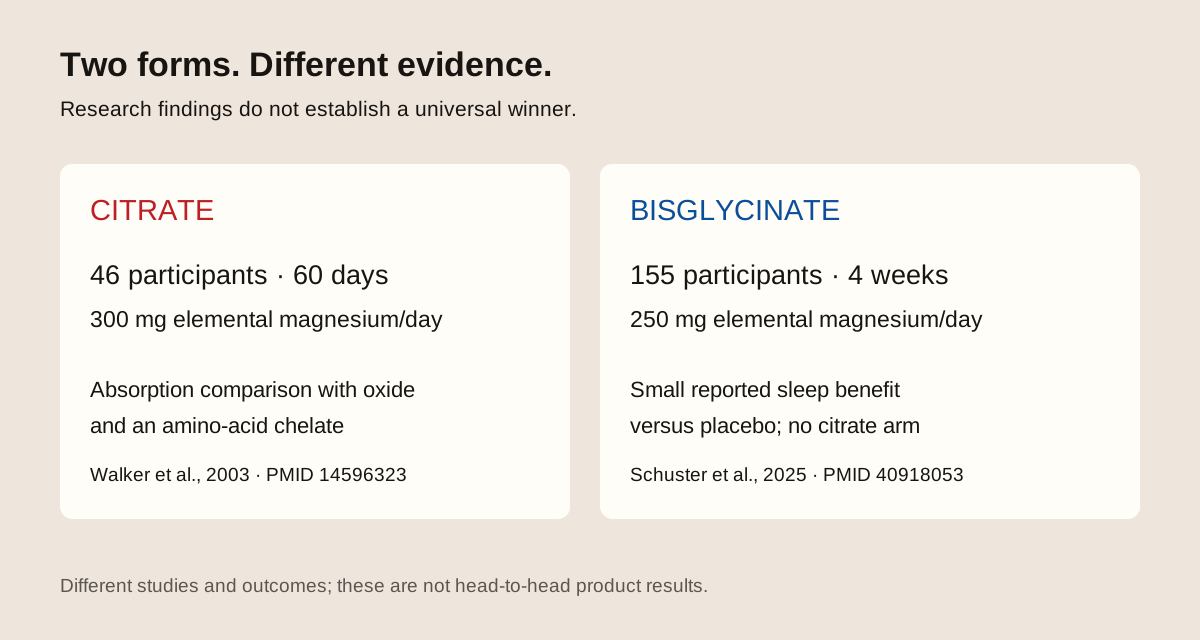
A 2003 randomized study compared citrate, an amino-acid chelate, oxide, and placebo in 46 healthy people. The magnesium groups received 300 mg of elemental magnesium daily for 60 days. Citrate performed well on the study's absorption measures. The paper does not justify treating every product described as a chelate as chemically or clinically interchangeable. Walker and colleagues, 2003
A larger 2022 trial provides another useful distinction. It included 164 participants and compared citrate, oxide, sulfate, and placebo over 24 weeks, using 450 mg of magnesium daily in the active groups. Citrate produced a larger increase in urinary magnesium than the other magnesium forms, but the interventions did not improve arterial stiffness or blood pressure compared with placebo. Schutten and colleagues, 2022
These studies answer different questions. An absorption marker can help distinguish preparations, but it does not establish that buying the better-absorbed preparation will improve sleep, relieve cramps, or prevent a cardiovascular event. Also, neither study was a direct trial of the current Nature Made and Thorne products mentioned here.
That is why a precise claim such as “citrate produced a higher urinary magnesium measurement in this study” is more useful than a sweeping promise that one form works better for every purpose.
How strong is the glycinate evidence for sleep?
In 2025, Schuster and colleagues randomized 155 adults reporting poor sleep to magnesium bisglycinate or placebo for four weeks. The active preparation supplied 250 mg of elemental magnesium daily. Insomnia Severity Index scores fell by 3.9 points in the magnesium group and 2.3 points with placebo; the reported effect size was small, at 0.2. PubMed trial record
The preparation also supplied 1,523 mg of glycine daily. Sleep was assessed using questionnaires, and there was no citrate comparison group. The study was funded by the researchers' university institute; one author disclosed nutraceutical-industry relationships. These details are available in the full paper.
This is a reason to take the sleep question seriously, not a reason to promise that a glycinate capsule will solve insomnia. A modest questionnaire result does not show that glycinate outperforms citrate, that all glycinate products perform alike, or that increasing the dose improves the outcome.
For a buyer, the distinction changes what counts as value. A higher price might buy a preferred format or better product documentation. It does not automatically buy a larger sleep benefit.
Citrate supplements and citrate laxatives are different purchases
Magnesium citrate medicines are used for short-term occasional constipation. They retain water with the stool, and the medicine information describes an expected bowel movement within 30 minutes to six hours. That timing belongs to the laxative use, not to every citrate capsule sold as a supplement. MedlinePlus
Do not use the bottle size, dose, or timing from a laxative page to interpret a routine supplement. Equally, do not assume that a nutritional supplement will deliver the medicine's bowel effect on the same schedule. We explain the timing distinction separately in how long magnesium citrate stays in your system.
If a supplement causes unwanted loose stools, that is a reason to reconsider the amount and formulation. It is not evidence of a cleansing process or proof that the product is working especially well.
Dose and medication use can matter more than form
The US adult upper limit for magnesium from supplements and medications is 350 mg daily; magnesium naturally present in food is excluded. Clinician-directed treatment may use a different amount. Excess supplemental magnesium can cause diarrhea, nausea, and cramping, and impaired kidney function increases the risk of accumulation. Magnesium can also interfere with some antibiotics and osteoporosis medicines. NIH magnesium safety and interaction guidance
A person taking medication or living with kidney disease needs an individual plan before starting or changing magnesium. Neither the word “chelated” nor a lower price resolves those questions.
Three buying situations that lead to different answers
Consider a reader who already uses a citrate capsule to supplement their diet, tolerates it, and has no change in their intended amount. The studies reviewed here give that reader no clear reason to replace it solely because a glycinate advertisement promises superior sleep. Keeping a suitable product also avoids paying more for a benefit that has not been demonstrated in a direct comparison.
A second reader wants a capsule providing 200 mg per complete serving and is choosing between that format and a powder. Here, the useful difference is the routine. The Nature Made example takes two capsules; the Thorne example takes one scoop mixed with water. Both declare the same elemental amount. Choosing the capsules is a preparation preference, while choosing the powder avoids swallowing capsules. Neither decision requires claiming that one form is medically superior.
A third reader has occasional constipation and is searching for citrate because they want a bowel movement. This person needs the directions on a laxative medicine, including its indicated use, rather than a comparison based on supplement cost per 100 mg. Treating the three readers as one audience would produce a misleading “best magnesium” answer. Our recommendation depends first on which question they are asking.
For a side-by-side look at the exact products, see our three-product magnesium comparison. It separates the form decision from the practical differences between a capsule bottle and a powder container.
What to record when comparing two products
Put the complete Supplement Facts panels beside each other. Record the source form, magnesium per serving, number of units per serving, other ingredients, and the instructions. If you compare only the words glycinate and citrate, you may miss a twofold difference in the declared serving amount.
Keep a separate line for products you already use. A product name such as “electrolytes” or “multimineral” does not tell you whether it supplies magnesium or how much. Use its label. Our elemental magnesium guide shows the arithmetic with current examples, including the difference between a capsule count and a serving count.
If a clinician has recommended supplementation, bring both labels and the intended amount to that discussion. This is particularly useful when one option combines several ingredients: switching from a simple product to a blend changes more than the magnesium form. A response after the switch cannot be attributed confidently to glycinate or citrate alone.
For your own notes, a useful entry is specific: product name, amount used, date, reason for use, and what changed. “Magnesium worked” is less informative than identifying the actual preparation and the outcome you noticed. Personal observations can guide a conversation about tolerability, but they are not a controlled test of absorption or effectiveness.
How we would read a new “best form” study
The first question is whether it actually compares the two forms. A glycinate-versus-placebo study can test the studied preparation against placebo, but it cannot establish that citrate is worse. A comparison against oxide also leaves the glycinate-versus-citrate question open.
Next, check whether the elemental amounts match. Equal weights of magnesium compounds are not necessarily equal amounts of magnesium. Then look at the other ingredients, the people enrolled, and what the researchers measured. A study in one population is not automatically a guide for children, pregnancy, kidney disease, or a different treatment goal.
Finally, distinguish the size of the observed difference from the existence of a statistically detectable difference. The sleep trial's two groups both improved; the comparison between groups is the relevant question. A reader should also be able to locate the methods and disclosures rather than rely on a sales-page summary. Those are the details that would justify changing this guide when better evidence appears.
Make the choice in this order
First, decide whether you are buying a nutritional supplement or a laxative medicine. Second, compare the elemental dose and the complete daily routine, including other products that contain magnesium. Third, choose capsules or powder based on what you will actually use. Finally, compare the cost and the evidence behind any testing claims.
For routine supplementation, our preference is the product whose elemental dose, format, and tolerability fit the intended use. Citrate is a reasonable choice on that basis, and glycinate is an alternative if citrate does not suit you. The studies reviewed here do not establish that glycinate consistently causes fewer bowel symptoms than citrate.
Does “bisglycinate” identify a different mineral?
No. It describes the glycine-bound compound. Compare the magnesium amount, serving size, and full formula rather than the shortened name.
Does a higher absorption measurement prove a better health outcome?
No. The 2022 trial found differences in magnesium measurements without improved arterial stiffness or blood pressure versus placebo.
Should everyone taking citrate switch to glycinate?
No. A tolerated citrate product that fits the intended dose does not become unsuitable because another form is popular.
Sources and editorial approach
This guide compares published research, official labeling information, and manufacturer specifications checked on September 15, 2026. It is a research-based explanation, not a report of personal product use. Research findings are kept separate from our buying judgments. See HealthPlugged's editorial method.
- NIH Office of Dietary Supplements: magnesium fact sheet.
- Walker et al., 2003: randomized magnesium preparation comparison.
- Schutten et al., 2022: magnesium forms and arterial stiffness.
- Schuster et al., 2025: magnesium bisglycinate and sleep, with full methods and disclosures.
- MedlinePlus: magnesium citrate medicine information.
Read next
Prepared with AI-assisted research and writing. This article compares source documents; it does not report personal product testing or medical review.