
The three products at a glance
This comparison covers three exact US products: one glycinate capsule, one bisglycinate powder, and one citrate capsule. We checked manufacturer specifications and advertised one-time prices on September 15, 2026. The selection is deliberately limited to these different formats and doses; it is not a ranking of the entire magnesium market.
| Product and package | Best fit in this comparison | Magnesium per serving | Package price | Cost per serving | Cost per 100 mg |
|---|---|---|---|---|---|
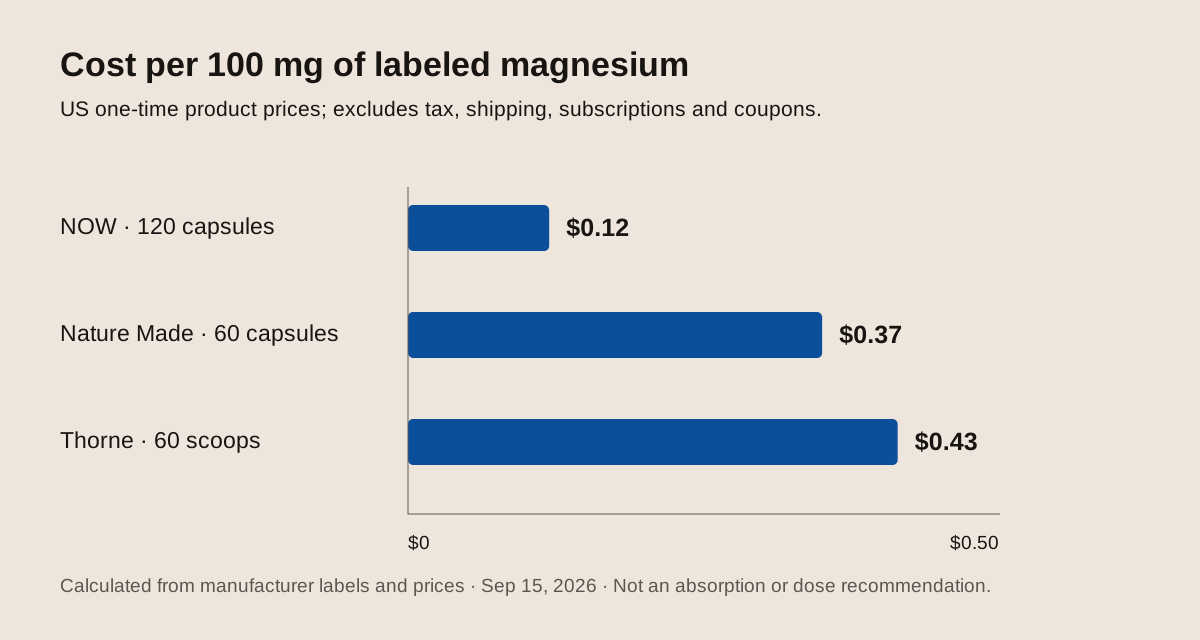
| Nature Made High Absorption Magnesium Glycinate, 60 capsules | A 200 mg capsule serving | 200 mg in 2 capsules | $21.99 | $0.73 | $0.37 |
| Thorne Magnesium Bisglycinate, M204, 60 servings | Powder with a sport-certification listing | 200 mg in 1 scoop | $52.00 | $0.87 | $0.43 |
| NOW Magnesium Citrate, 120 Veg Capsules, SKU 1294 | Lowest normalized cost when the dose fits an established plan | 400 mg in 3 capsules | $19.99 | $0.50 | $0.12 |
Sources: Nature Made, Thorne, and NOW. Tax, shipping, subscriptions, and coupons are excluded. These are label-based cost calculations, not measurements of absorbed magnesium or checkout totals.
How we reached the recommendations
We compared the exact formula, elemental amount, serving units, package count, preparation, current price, and accessible certification evidence. We did not assign points for customer-star averages, promises of better sleep, or a larger front-label number.
The first-choice recommendation follows a narrow buying need: a ready-to-take capsule product with a 200 mg serving. Nature Made meets that need at a lower checked cost per 200 mg than the Thorne powder. A reader who dislikes capsules or needs a product appearing in a sport-certification directory has a different priority, which moves Thorne ahead.
NOW answers the value question, but its dose changes the decision. The lowest price per milligram is useful information; it does not make the highest serving the right choice for an unsupervised routine. That is why the comparison has three situation-specific conclusions rather than treating one product as the winner on every measure.
This is a label-and-document comparison. We did not purchase, taste, or laboratory-test these products, and the links in this article contain no affiliate tracking. Our editorial method explains how product specifications, certification, and clinical studies are assessed separately.
Nature Made: first choice for a 200 mg capsule serving
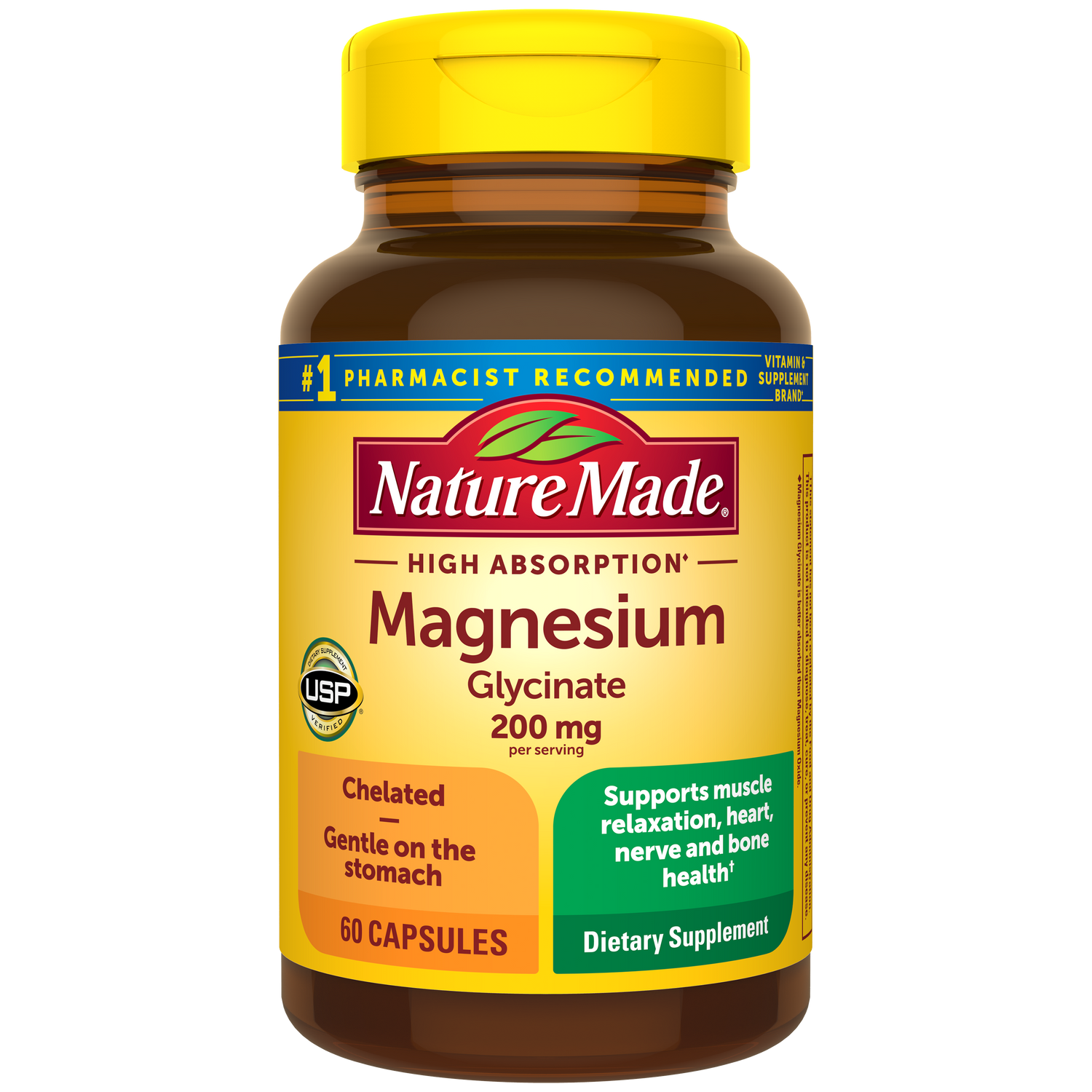
The checked 60-capsule package supplies 30 two-capsule servings. Its appeal here is the manageable serving format and a direct calculation: 100 mg per capsule, 200 mg per labeled serving, and about $0.73 for that serving at the checked price.
This is the simplest of the three choices for a reader who specifically wants capsules at that serving amount. It requires no mixing and no measuring scoop. Its two-capsule format also makes the label easy to interpret without mistaking the amount per serving for the amount in each capsule.
The practical drawback is capsule count: two capsules are one full serving, and the bottle lasts 30 labeled servings, not 60. It also costs more per equal amount of magnesium than the NOW product.
We do not treat the manufacturer's “gentle on the stomach” wording as proof that every user will tolerate it or that it outperforms citrate in a head-to-head trial. The recommendation rests on the verified format, amount, and price. Official product specifications
Thorne: the powder choice with a certification record
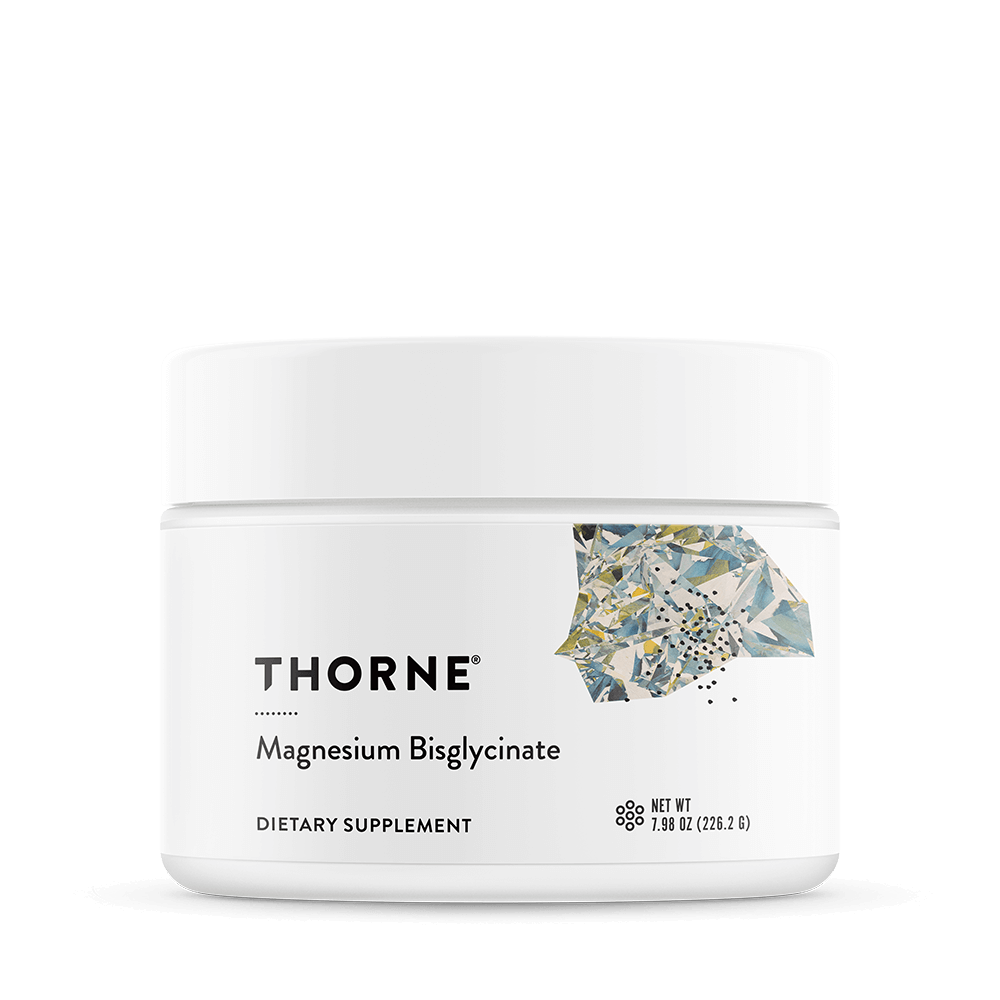
Thorne's M204 product supplies 200 mg of magnesium in one scoop, with 60 servings at a listed price of $52. The ingredient table names citric acid and monk fruit concentrate in addition to magnesium bisglycinate. The manufacturer instructs users to mix the scoop with at least eight ounces of water. Official product page
For a reader who prefers a drink to swallowing capsules, that is a meaningful difference. The tradeoff is preparation: you need water and a serving measure, and the added sweetener and acid may matter to your preferences. We have not taste-tested the powder, so no taste or mixability score is assigned.
The NSF Certified for Sport directory lists Thorne Magnesium Bisglycinate powder, including a 226.2 g package, a 3.77 g scoop, and individual lots. A separate NSF record describes a 187 g package and a 3.11 g scoop. Match the version and lot on your container to its record rather than assuming the scoop weight stayed constant across versions.
That traceable listing is why Thorne wins the certification-focused powder slot here. It does not show that Thorne delivers better sleep or better athletic performance than the other products.
At an equal 200 mg amount, the Thorne serving costs about $0.87 versus Nature Made's $0.73. The difference is approximately $0.13 per serving when calculated before rounding, or $4.01 over 30 servings. You are paying for a different format and documentation profile, not a verified multiple of effectiveness.
NOW: lowest normalized cost, with an important dose distinction
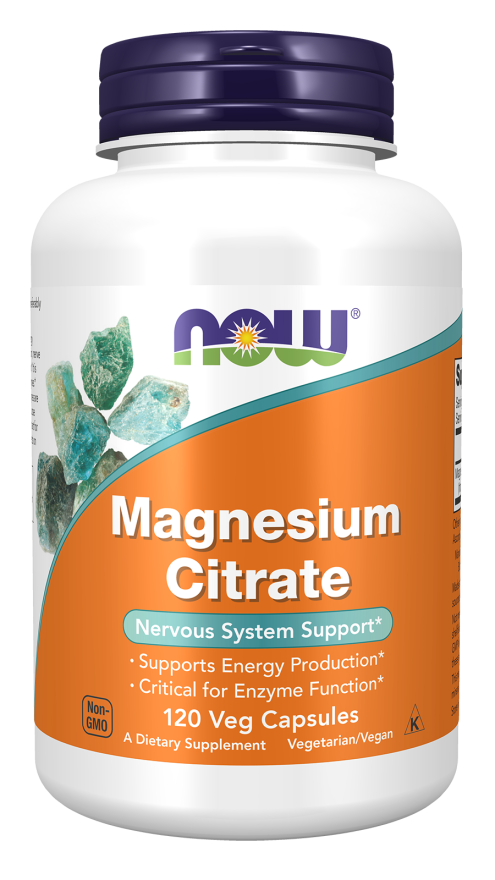
NOW's 120-capsule bottle, SKU 1294, has 40 labeled servings. Three capsules provide 400 mg of magnesium as citrate. At $19.99, that is about $0.50 per serving and $0.12 per 100 mg, the lowest normalized cost of the three products. Official package and Supplement Facts tables
The low unit cost is useful for someone whose appropriate dose has already been established. It is not a reason to copy the full serving automatically. The US adult upper limit for magnesium from supplements and medicines is 350 mg daily, excluding magnesium in food. A clinician may direct a different amount for a specific purpose. NIH magnesium guidance
The manufacturer identifies the capsules as vegan. Its ingredients list includes hypromellose, ascorbyl palmitate, and silicon dioxide. Capsule format avoids a flavored drink, but one full serving requires three capsules.
The product page also displays an Intertek GMP badge. That is a different statement from a publicly accessible laboratory result for your bottle's lot. We do not convert a manufacturing badge into an independent potency result or a clinical-outcome score.
How to use the price comparison correctly
The cost formula is package price divided by labeled servings. To normalize it, divide the resulting serving cost by the labeled magnesium amount and multiply by 100. This keeps a 200 mg serving from being compared directly with a 400 mg serving as though the quantities were equal.
For this reason, two price questions can produce different answers. Nature Made has the lower upfront price of the two glycinate-format products in this comparison. NOW has the lowest cost per equal labeled amount across all three. Thorne has the highest upfront purchase price but also the most servings per checked container.
Bottle duration follows the amount actually used. The 30, 40, and 60 serving counts in the table describe the labels, not a personalized calendar. A clinician-directed amount can change how long a package lasts.
Shipping can also change a small price gap. We have not simulated a purchase or assumed a shipping address, so the comparison keeps advertised product prices separate from delivered cost. A subscription price is not substituted for a one-time purchase price.
Equal-quantity cost versus money spent today
An equal-quantity comparison helps separate value from package size. Sixty servings of 200 mg each contain 12,000 mg of labeled magnesium in total. One Thorne container supplies that total for $52. Two Nature Made bottles supply the same total for $43.98. The difference is $8.02, before shipping and tax.
One NOW bottle contains 16,000 mg across its 40 full 400 mg servings. On a proportional basis, 12,000 mg costs about $14.99 at the checked unit price, but you cannot purchase three quarters of a bottle through this comparison. The whole-bottle price remains $19.99. The proportional figure is a value calculation, not a suggested routine or a checkout price.
This distinction matters when the most economical option requires a bigger upfront purchase. For the two glycinate products here, Nature Made requires the smaller initial payment. Thorne provides twice as many complete 200 mg servings in one container. A reader who wants to minimize today's spending and a reader who wants a longer interval between container purchases can therefore make different choices from the same table.
Let the preparation routine break a close decision
For use at home, a powder requires somewhere to keep the scoop, a glass, and water. Thorne's instructions specify at least eight ounces of water. If that preparation fits your existing routine, the powder format has a clear practical role. If you want to take a labeled capsule serving with a meal without mixing a drink, Nature Made better matches that preference.
NOW keeps the capsule format, but three capsules make its full serving. Someone comparing only bottle price could overlook both the capsule count and the larger elemental amount. Read those two fields together before deciding that the product is a direct substitute for the two-capsule Nature Made serving.
Sweetener preference can settle the powder-versus-capsule decision as well. Thorne identifies monk fruit concentrate in its formula. The two capsule ingredient lists do not include that ingredient. That is a verifiable difference in these exact products, rather than a judgment about which format tastes better or works faster.
What the product photos and documents establish
The images in the product sections come from the manufacturers' own product pages. They help identify the package discussed in the table. They are not photographs of products we purchased, and the general editorial image at the top does not depict a test of these three brands.
Package identity is particularly useful here. NOW sells several counts under a similar product name; Thorne has more than one package size in certification records. A recognizable label, serving table, and exact package count prevent a price for one version from being attached to another.
Quality documentation also needs a defined scope. The Nature Made label image includes a USP verification statement. That is a manufacturer-displayed claim; this review's independent directory lookup was for Thorne's NSF record. We do not treat the two observations as the same verification procedure or conclude that the other products failed a test. Thorne remains our choice specifically for a powder with a traceable sport-certification record.
The FDA does not approve dietary supplements for safety and effectiveness before sale. A product image, a familiar manufacturer, or a certification mark is therefore not an FDA approval or proof of a clinical benefit. FDA consumer guidance
The choice can also be no new supplement
Magnesium is present in foods including nuts, beans, whole grains, and leafy greens. Before adding a separate product, check whether an existing multivitamin, electrolyte mixture, or medicine already supplies it. Reduced kidney function and excessive supplemental or laxative use can change the risk of magnesium accumulation. MedlinePlus: magnesium in diet
If you take medicines, ask a pharmacist to check compatibility and timing against the exact magnesium product. If your purpose is treatment of constipation, use the labeled medicine guidance rather than treating these nutritional products as interchangeable laxatives. MedlinePlus: magnesium citrate
Which one would we choose?
- For a straightforward 200 mg capsule serving: Nature Made. It matches that format and amount at the lower cost of the two glycinate options reviewed.
- For powder and a matching sport-certification record: Thorne. The additional cost buys a different preparation and a directory record you can trace.
- For lowest cost per labeled amount: NOW. The dose still has to fit your established plan; its 400 mg full serving is not our default starting recommendation.
The useful next question is whether you need capsules, a powder, a certification match, or a particular elemental amount. Those constraints narrow the purchase more reliably than the largest number on the bottle.
Is the lowest price per 100 mg always the best purchase?
No. It does not account for the dose you need, the format you will use, certification requirements, or shipping.
Does the certification recommendation apply to every Thorne product?
No. It concerns the listed magnesium bisglycinate powder. Match the product version and lot to the directory.
Were these products tested against one another for sleep?
This review does not establish a head-to-head sleep benefit. Its recommendations use product specifications, cost, and documentation.
Source record
Specifications and prices were checked September 15, 2026 using the three manufacturers' US product pages. Thorne's price and ingredients and NOW's package variants were additionally read in the rendered browser pages. The NSF directory supplied the certification records. The comparison calculations can be reproduced from the figures printed in the table.
Read the companion Elemental Magnesium: How to Read the Label for the arithmetic, and Magnesium Glycinate vs Citrate: How to Choose for the form and research comparison.
Read next
Prepared with AI-assisted research and writing. This article compares source documents; it does not report personal product testing or medical review.